

🚨 CANADA vs USA: The Electricity Threat Is Getting Serious
Canada–U.S. trade tensions are entering a new phase — and this time, electricity is at the center of the fight.
Ontario Premier Doug Ford has warned that “everything is on the table,” including restrictions on electricity exports to the United States if the trade conflict escalates further. Ontario supplies electricity to several U.S. states, making the threat politically and economically significant.
But could Canada actually plunge America into darkness?
Not exactly.
Experts say cutting Canadian electricity would not automatically trigger massive nationwide blackouts. The more realistic consequences could include higher electricity prices, pressure on regional grids, and increased costs for consumers and businesses that depend on cross-border power.
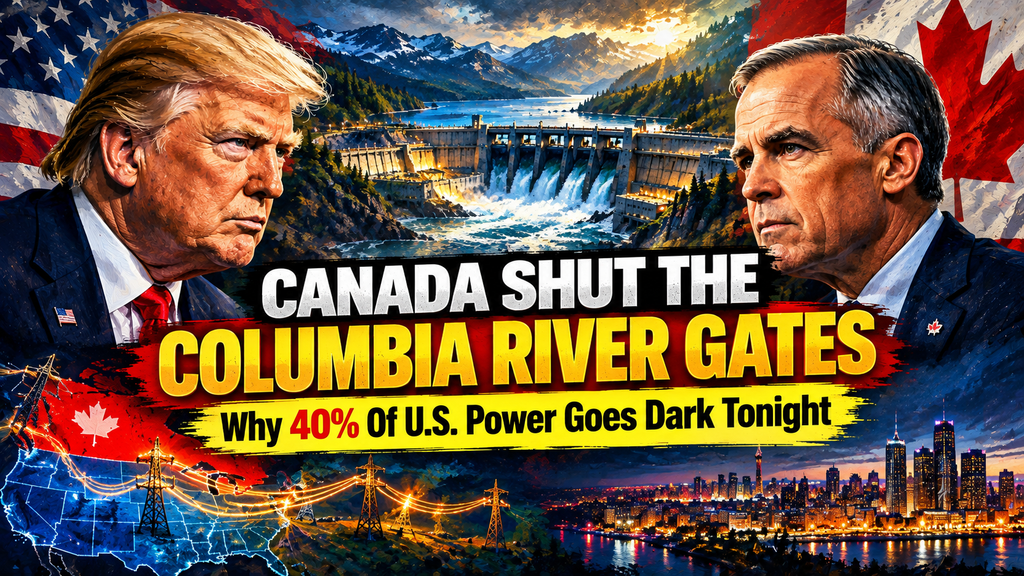
At the same time, another major issue is drawing attention: the Columbia River Basin and the Columbia River Treaty, which connects Canada and the United States through decades of cooperation over water management, flood control, and hydropower.
In this video, we break down:
🇨🇦 Doug Ford’s electricity warning
🇺🇸 Which U.S. states rely on Canadian power
⚡ What could happen if electricity exports were restricted
📈 Why electricity prices could rise
🌊 The Columbia River Treaty and its strategic importance
🏭 How the trade war is affecting North American industry
🇨🇦 Mark Carney’s response to Washington
🇺🇸 Trump’s escalating tariff pressure
🔎 What is real — and what is exaggerated online
Canada has not shut off U.S. electricity, and there is no evidence of a nationwide American blackout. The real story is about economic leverage, energy security, and how far both sides are willing to escalate.
Watch until the end to understand why this electricity dispute could become one of the most important pressure points in the Canada–U.S. trade war.
⚠️ Disclaimer: This video is for news, commentary, and educational purposes. Claims and developments are based on publicly available reporting and may change as negotiations continue.
#Canada #USA #Trump #MarkCarney #DougFord #CanadaUS #TradeWar #Electricity #EnergyCrisis #Ontario #ColumbiaRiverTreaty #USPolitics #CanadaNews #BreakingNews
- Columbia River Treaty — Government of Canada
Treaty 17 January 1961 ko sign hua, 1964 mein force mein aaya. Canada ke official page ke mutabik termination ke liye 10 years’ notice required hai; 2024 earliest termination date thi, automatic termination nahi. CCanada
Government of Canada — Columbia River Treaty - U.S. Department of State — 2024 Agreement in Principle
July 2024 mein Canada aur U.S. ne Treaty modernization ke key elements par agreement in principle announce kiya. U.S. State Department specifically Columbia River basin ko U.S. hydropower ka 40% source batata hai. Yeh 40% total U.S. electricity nahi hai. UU.S. Department of State+1
U.S. Department of State — Agreement in Principle - U.S. State Department — Interim Measures
November 2024 mein dono countries ne interim arrangements implement kiye, including flood-risk management, power coordination and transmission rights. Isliye “Canada suddenly shut the gates” ko current factual event ke roop mein present karna misleading hoga. U
U.S. Department of State — Interim Measures - Global Affairs Canada — 2025 Treaty status
Canada ne May 2025 mein state kiya tha ki modernization negotiations paused hain, lekin interim measures treaty coordination ko continue kar rahe hain. OOpen Canada Search
Global Affairs Canada — Columbia River Treaty Question Period Note - Ontario — 25% electricity export surcharge, March 2025
Ontario ne March 10, 2025 ko U.S. electricity exports par 25% surcharge apply kiya tha, affecting customers in Michigan, Minnesota and New York. This is a separate Ontario electricity/trade issue from the Columbia River Treaty. OOntario Newsroom+1
Ontario Newsroom — Electricity Export Surcharge - Canada — 2025 tariff response and auto sector
Canada’s April 2025 countermeasures included responses to U.S. auto tariffs, while the federal government described the auto sector as an important part of the Canada-U.S. trade dispute. CCanada PM
Government of Canada — Canada-U.S. tariff countermeasures - Current 2026 context — Canada-U.S. trade negotiations
For a video being published now, the 2025 material should be clearly labelled as historical context. In August 2026, Prime Minister Mark Carney said Canada had suspended U.S. trade negotiations after new U.S. terms were proposed. C
Prime Minister of Canada — August 22, 2026 remarks