


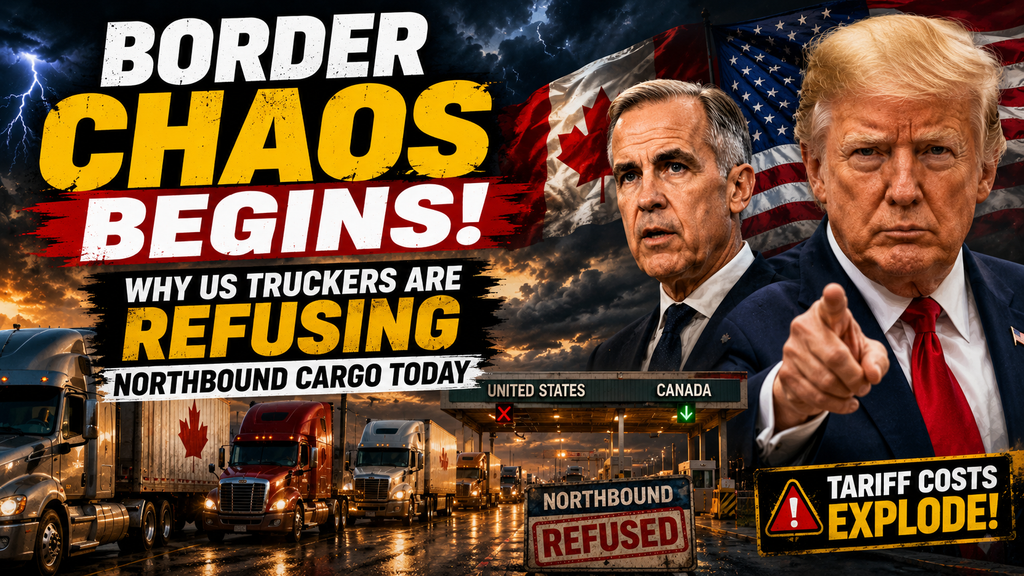
The Canada–U.S. border is entering a new period of trade uncertainty. As new U.S. tariffs on Canadian goods and Canada’s planned retaliatory measures reshape cross-border commerce, trucking companies and shippers are reassessing the true cost of every northbound load. (Canada)
Why are some carriers becoming more cautious about Canada-bound freight? How could duties, delays, detention costs, fuel expenses, and return-trip uncertainty affect trucking decisions?
In this video, we examine the pressure building across the Canada–U.S. freight network—from customs brokers and warehouse operators to independent truckers and major manufacturers. With major border corridors handling enormous volumes of trade, even small disruptions can create wider supply-chain effects. (Reuters)
⚠️ Is this only a temporary disruption—or the beginning of a much bigger North American freight crisis?
Watch until the end for the full story.
#Canada #USA #BorderChaos #Truckers #Freight #Trucking #TradeWar #Tariffs #SupplyChain #CanadaUSBorder #Logistics #BreakingNews #DonaldTrump #MarkCarney
Official Canadian sources
- Canada Department of Finance — September 8 counter-tariff product list — confirms tariffs of 15%, 25%, and 50%, covering $27.6 billion in U.S. imports, effective September 8, 2026.
- Canada Department of Finance — countermeasures announcement — explains the August 2026 Canadian response and the dollar-for-dollar approach.
- Canada Border Services Agency — Windsor–Detroit trade corridor — states that Windsor–Detroit carries about 30% of Canada–U.S. trade by truck and more than $274 million in trade per day.
Recent news coverage
- Reuters — Canada to retaliate after trade talks fail
- Reuters — Canada-U.S. trade talks and current tensions, September 1, 2026
- Reuters — automakers and increased tariff pressure
- Associated Press — Canada’s retaliatory tariffs on hundreds of U.S. goods