





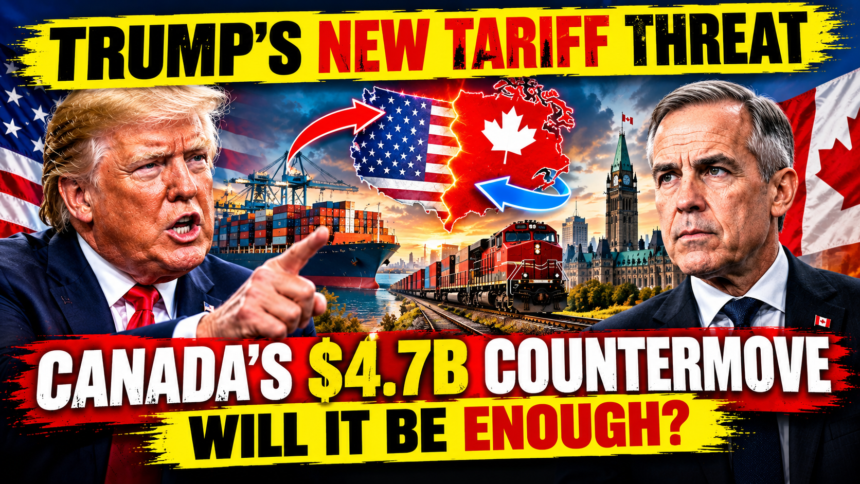
Trump’s ANGRY Canada Rant Sends Shockwaves Through Ottawa
Canada and the United States have been deeply connected for decades. But as tariffs and trade uncertainty reshape North American commerce, Canada is taking a different approach: build more at home, diversify its markets, and reduce dependence on a single economic relationship.
At the center of this strategy is a major passenger-rail investment involving 313 new cars, with design, manufacturing and maintenance work taking place in Canada. The project is expected to create thousands of person-years of employment and provide long-term work for Canadian manufacturing.
But the strategy goes beyond trains.
Canada is also expanding export infrastructure, strengthening transportation links, investing in maritime capacity and looking toward markets beyond the United States.
The bigger question is whether these investments can do more than respond to today’s trade conflict.
Can Canada rebuild industrial capacity that has declined over decades?
Can new infrastructure create long-term jobs and attract investment?
And if Canada becomes less dependent on the American market, does that change the balance of power in North American trade?
This video examines the economic strategy behind Canada’s response, the opportunities it creates, and the risks that could still remain — especially for the highly integrated automotive industry.
Important: This video is presented for news, commentary, analysis, and educational purposes. Economic outcomes can change as trade policies, tariffs, contracts, and market conditions develop.
What do you think — is Canada building a stronger independent economy, or is this strategy too expensive and too slow?
Share your opinion in the comments.
#Canada #TradeWar #USCanada #Tariffs #CanadianEconomy #Manufacturing #EconomicNews #CanadaNews #NorthAmerica #Trade
- Government of Canada — Transport Canada: Canadian transportation, rail infrastructure aur supply-chain policy.
- Government of Canada — Global Affairs Canada: Canada–U.S. trade relations, tariffs aur trade policy.
- Statistics Canada: Canada–U.S. trade, manufacturing, employment aur economic data. U.S. Census Bureau: U.S.–Canada bilateral trade statistics.
- U.S. International Trade Commission (USITC): tariffs aur trade-policy analysis.
- U.S. Department of Commerce: manufacturing, trade aur industrial-policy information.
- Bank of Canada: tariffs, economic outlook aur Canadian economic impacts.
- OECD: international trade, supply chains aur economic diversification analysis.