




- What Is the Alliance for the Future?
- How the Partnership Could Benefit Canada’s Economy
- Energy and Critical Minerals Take Centre Stage
- Defence and Security Cooperation Expand
- Could Canada Move Closer to the European Union?
- What This Means for Canada’s International Strategy
- Conclusion
- What Is the Alliance for the Future?
- How the Partnership Could Benefit Canada’s Economy
- Energy and Critical Minerals Take Centre Stage
- Defence and Security Cooperation Expand
- Could Canada Move Closer to the European Union?
- What This Means for Canada’s International Strategy
- Conclusion
- Why the 2026 Midterm Elections Matter
- Democrats and Republicans Compete for Voters
- What Early Voting Could Mean
- What Is at Stake for Donald Trump?
- Conclusion
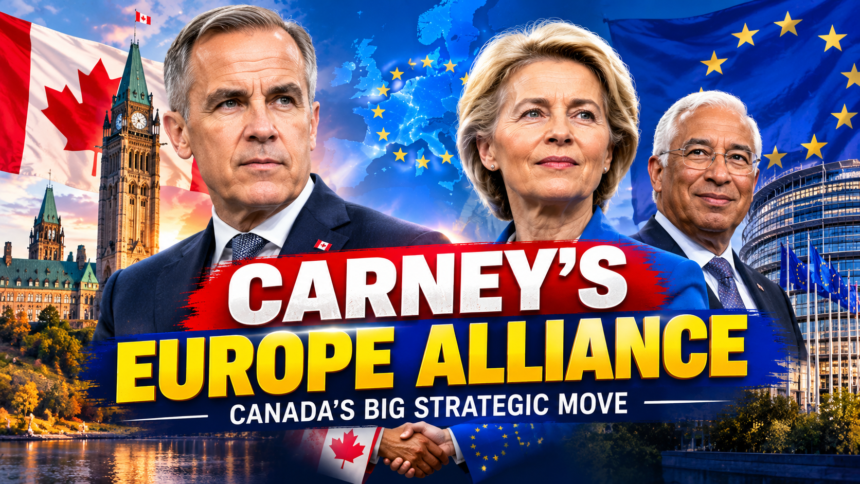
MONTREAL, Canada — October 31, 2026 — Canadian Prime Minister Mark Carney is strengthening Canada’s relationship with Europe through a new partnership with the European Union focused on economic opportunities, affordability, trade diversification and strategic independence.
On October 30, Canada and the European Union announced the Alliance for the Future following a Canada-EU summit in Montreal, Quebec. The initiative aims to strengthen cooperation across several strategic sectors while creating new opportunities for businesses, workers, students and researchers on both sides of the Atlantic.
Carney was joined by European Council President António Costa and European Commission President Ursula von der Leyen for the announcement. The leaders outlined plans to deepen economic ties and improve cooperation in areas ranging from digital technology and energy to critical minerals and defence.
What Is the Alliance for the Future?
The Alliance for the Future is a new framework designed to strengthen Canada-EU economic security and cooperation.
According to the Canadian government’s announcement, the initiative will focus on creating new export markets, improving access to technology and research, strengthening supply chains and expanding opportunities for people in Canada and Europe.
The partnership reflects growing efforts by both sides to reduce economic vulnerabilities and improve resilience in a changing global environment.
Rather than relying on a narrow set of international relationships, Canada and the EU are seeking to build stronger connections across multiple industries and strategic sectors.
How the Partnership Could Benefit Canada’s Economy
One of the main objectives is to create more opportunities for Canadian businesses seeking access to European markets.
Canada and the EU have concluded negotiations on a new digital trade agreement intended to make cross-border digital business easier and provide greater certainty for companies operating in both markets.
The partners are also pursuing stronger cooperation in financial services, competition policy and cross-border payments. These initiatives could help businesses operate more efficiently and give consumers additional choices.
For Canadian exporters, closer economic ties could provide opportunities to reach new customers and expand beyond traditional markets.
However, the practical economic benefits will depend on implementation, business investment and the successful completion of any remaining negotiations.
Energy and Critical Minerals Take Centre Stage
Energy and critical minerals are central to the new partnership.
Canada possesses substantial energy resources and critical mineral supplies that are important to advanced manufacturing, clean-energy technologies and defence industries.
The EU, meanwhile, offers a large market, established industrial capabilities and significant research infrastructure.
By combining these strengths, Canada and Europe aim to develop more resilient supply chains and improve access to strategically important resources.
The two sides are also examining opportunities related to liquefied natural gas exports and cooperation in emerging technologies.
These efforts could create new opportunities for Canadian producers and investors, although individual projects will depend on market conditions, infrastructure and regulatory requirements.
Defence and Security Cooperation Expand
The partnership also includes measures designed to strengthen defence cooperation and collective resilience.
Canada and the EU are working to improve access to critical materials, support defence-related industrial production and strengthen technological infrastructure.
Canada’s participation in the European Security Action for Europe initiative has already created opportunities for Canadian defence companies to compete for European contracts.
The October 30 announcement included a new contract for Canadian-made military helmets for Latvia and additional cooperation involving critical minerals and emergency communications.
The partners also plan to strengthen cooperation in areas such as satellite connectivity and navigation services, which can support governments, emergency responders and defence operations.
These initiatives highlight the growing importance of economic security and technological resilience in international relations.
Could Canada Move Closer to the European Union?
One of the most significant developments is the plan to explore a deeper institutional relationship between Canada and the European Union.
The Canadian government announced that both sides will work toward what Carney described as the deepest possible partnership short of full EU membership, with Canada potentially becoming the EU’s first associate member.
The precise structure, scope and implications of this proposed arrangement remain under discussion.
Canada is not joining the EU as a full member. Instead, the initiative would explore a closer relationship that could provide additional opportunities for cooperation while preserving Canada’s status as an independent country.
The leaders intend to continue discussions over the coming months, with further progress expected at future Canada-EU meetings.
What This Means for Canada’s International Strategy
The new alliance signals Canada’s intention to strengthen its international economic relationships and broaden its strategic options.
Closer ties with Europe could help Canadian companies diversify their export markets, attract investment and develop new partnerships in technology, energy and manufacturing.
The initiative also demonstrates how Canada and the EU are responding to shared concerns about supply-chain vulnerabilities, geopolitical uncertainty and competition for strategic resources.
For Carney’s government, the challenge will be turning diplomatic commitments into measurable results for Canadian workers, businesses and households.
Conclusion
Mark Carney’s announcement of the Alliance for the Future represents a significant step in Canada’s evolving relationship with Europe.
By expanding cooperation in trade, energy, critical minerals, technology and security, Canada and the European Union are seeking to create new economic opportunities while strengthening their strategic resilience.
The partnership’s long-term impact will depend on how quickly the announced initiatives are implemented and whether they deliver tangible benefits for Canadians and Europeans.
For Canada, closer ties with Europe could become an important part of a broader strategy to diversify trade, attract investment and strengthen its position in an increasingly uncertain global economy.
Official Canadian Government Announcement:Canada and the European Union Announce the Alliance for the FutureJoint Canada-EU Statement:Alliance for the Future — Joint StatementReuters Report:Canada and EU to Define Closer Partnership by 2027
MONTREAL, Canada — October 31, 2026 — Canadian Prime Minister Mark Carney is strengthening Canada’s relationship with Europe through a new partnership with the European Union focused on economic opportunities, affordability, trade diversification and strategic independence.
On October 30, Canada and the European Union announced the Alliance for the Future following a Canada-EU summit in Montreal, Quebec. The initiative aims to strengthen cooperation across several strategic sectors while creating new opportunities for businesses, workers, students and researchers on both sides of the Atlantic.
Carney was joined by European Council President António Costa and European Commission President Ursula von der Leyen for the announcement. The leaders outlined plans to deepen economic ties and improve cooperation in areas ranging from digital technology and energy to critical minerals and defence.
What Is the Alliance for the Future?
The Alliance for the Future is a new framework designed to strengthen Canada-EU economic security and cooperation.
According to the Canadian government’s announcement, the initiative will focus on creating new export markets, improving access to technology and research, strengthening supply chains and expanding opportunities for people in Canada and Europe.
The partnership reflects growing efforts by both sides to reduce economic vulnerabilities and improve resilience in a changing global environment.
Rather than relying on a narrow set of international relationships, Canada and the EU are seeking to build stronger connections across multiple industries and strategic sectors.
How the Partnership Could Benefit Canada’s Economy
One of the main objectives is to create more opportunities for Canadian businesses seeking access to European markets.
Canada and the EU have concluded negotiations on a new digital trade agreement intended to make cross-border digital business easier and provide greater certainty for companies operating in both markets.
The partners are also pursuing stronger cooperation in financial services, competition policy and cross-border payments. These initiatives could help businesses operate more efficiently and give consumers additional choices.
For Canadian exporters, closer economic ties could provide opportunities to reach new customers and expand beyond traditional markets.
However, the practical economic benefits will depend on implementation, business investment and the successful completion of any remaining negotiations.
Energy and Critical Minerals Take Centre Stage
Energy and critical minerals are central to the new partnership.
Canada possesses substantial energy resources and critical mineral supplies that are important to advanced manufacturing, clean-energy technologies and defence industries.
The EU, meanwhile, offers a large market, established industrial capabilities and significant research infrastructure.
By combining these strengths, Canada and Europe aim to develop more resilient supply chains and improve access to strategically important resources.
The two sides are also examining opportunities related to liquefied natural gas exports and cooperation in emerging technologies.
These efforts could create new opportunities for Canadian producers and investors, although individual projects will depend on market conditions, infrastructure and regulatory requirements.
Defence and Security Cooperation Expand
The partnership also includes measures designed to strengthen defence cooperation and collective resilience.
Canada and the EU are working to improve access to critical materials, support defence-related industrial production and strengthen technological infrastructure.
Canada’s participation in the European Security Action for Europe initiative has already created opportunities for Canadian defence companies to compete for European contracts.
The October 30 announcement included a new contract for Canadian-made military helmets for Latvia and additional cooperation involving critical minerals and emergency communications.
The partners also plan to strengthen cooperation in areas such as satellite connectivity and navigation services, which can support governments, emergency responders and defence operations.
These initiatives highlight the growing importance of economic security and technological resilience in international relations.
Could Canada Move Closer to the European Union?
One of the most significant developments is the plan to explore a deeper institutional relationship between Canada and the European Union.
The Canadian government announced that both sides will work toward what Carney described as the deepest possible partnership short of full EU membership, with Canada potentially becoming the EU’s first associate member.
The precise structure, scope and implications of this proposed arrangement remain under discussion.
Canada is not joining the EU as a full member. Instead, the initiative would explore a closer relationship that could provide additional opportunities for cooperation while preserving Canada’s status as an independent country.
The leaders intend to continue discussions over the coming months, with further progress expected at future Canada-EU meetings.
What This Means for Canada’s International Strategy
The new alliance signals Canada’s intention to strengthen its international economic relationships and broaden its strategic options.
Closer ties with Europe could help Canadian companies diversify their export markets, attract investment and develop new partnerships in technology, energy and manufacturing.
The initiative also demonstrates how Canada and the EU are responding to shared concerns about supply-chain vulnerabilities, geopolitical uncertainty and competition for strategic resources.
For Carney’s government, the challenge will be turning diplomatic commitments into measurable results for Canadian workers, businesses and households.
Conclusion
Mark Carney’s announcement of the Alliance for the Future represents a significant step in Canada’s evolving relationship with Europe.
By expanding cooperation in trade, energy, critical minerals, technology and security, Canada and the European Union are seeking to create new economic opportunities while strengthening their strategic resilience.
The partnership’s long-term impact will depend on how quickly the announced initiatives are implemented and whether they deliver tangible benefits for Canadians and Europeans.
For Canada, closer ties with Europe could become an important part of a broader strategy to diversify trade, attract investment and strengthen its position in an increasingly uncertain global economy.
WASHINGTON, DC — The United States is approaching a crucial political moment as Democrats and Republicans prepare for the November 3, 2026, midterm elections. The outcome could reshape the balance of power in Congress and influence President Donald Trump’s ability to advance his legislative agenda during the remainder of his term.
According to an October 31 report cited in the supplied news summary, more than 43 million Americans had already voted early. The reported figure highlights the importance of early voting as campaigns enter the final stretch before Election Day.
Why the 2026 Midterm Elections Matter
The midterm elections will determine all 435 seats in the US House of Representatives and approximately one-third of the Senate. The results could have significant consequences for the federal government’s legislative priorities.
For Republicans, maintaining control of Congress would help Trump pursue his policy agenda and secure support for his legislative proposals.
For Democrats, gaining seats could strengthen their influence over legislation, government spending and congressional oversight of the administration.
Democrats and Republicans Compete for Voters
Both parties are working to mobilize supporters, persuade undecided voters and secure victories in competitive congressional districts and Senate races.
Economic conditions, living costs, immigration, healthcare and public confidence in the administration could all influence voter decisions.
However, national polling and early-voting figures alone cannot determine which party will win. The outcome will depend on individual races, turnout patterns and how votes are distributed across states and congressional districts.
What Early Voting Could Mean
The reported total of more than 43 million early votes suggests substantial participation ahead of Election Day. However, the number should be considered in context: early-voting totals do not automatically indicate which party has an advantage.
Early voting includes ballots cast through different methods, depending on state election rules. The political significance of these votes will become clearer as more information about turnout and voting patterns becomes available.
What Is at Stake for Donald Trump?
The election will serve as an important test of the political environment during Trump’s presidency.
If Democrats gain control of either chamber of Congress, the administration could face greater challenges passing legislation and may encounter more intensive congressional scrutiny.
If Republicans retain control, Trump could have a stronger position in advancing his priorities through Congress.
The results could also influence both parties’ strategies ahead of the next presidential election cycle.
Conclusion
The November 3, 2026, US midterm elections represent a high-stakes contest for both major political parties. With millions of Americans reportedly having voted early, attention is turning to whether Democrats can gain congressional seats or Republicans can preserve their influence in Washington.
Ultimately, the balance of power will be determined by the results of individual congressional races across the country.
Editor’s note: The reported early-voting figure should be verified against the original October 31 source before publication. Early-voting totals are not, by themselves, evidence that either party is leading.